

Nicotinamide adenine dinucleotide (NAD+) is an important molecule that helps the body produce energy, maintain healthy cells, and support many biological processes. As interest in healthy aging, metabolism, and cellular health grows, more people are exploring NAD+ testing to understand their body's condition. However, one important question deserves attention: can the laboratory method used for testing change the results? 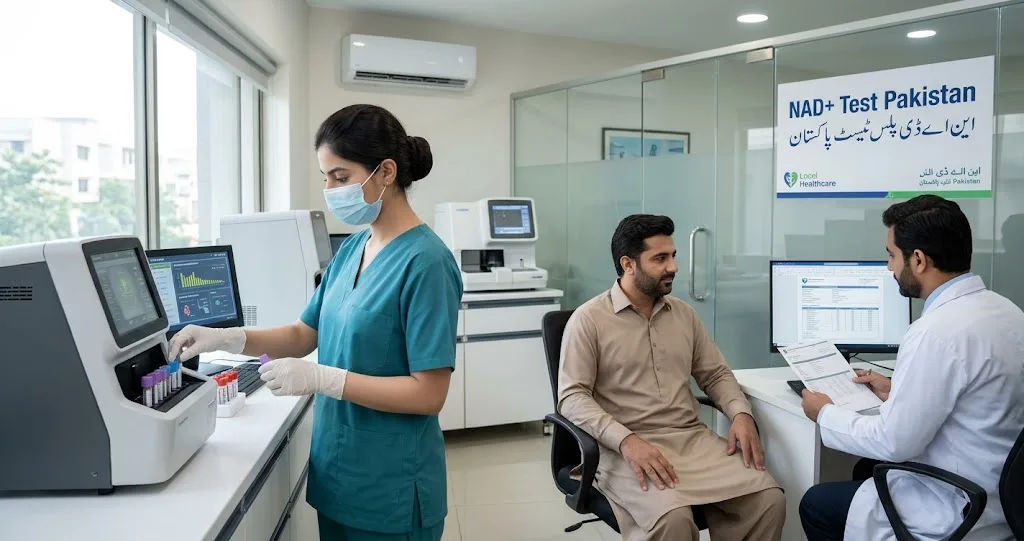 When considering a NAD+ test Pakistan, it is essential to understand that laboratory techniques, sample handling, testing equipment, and measurement procedures can influence the reported findings. Two laboratories may analyze similar samples yet produce different numbers because they use different methods or testing conditions.
This does not automatically mean that one laboratory is incorrect. Different analytical techniques may measure NAD+ in different ways, and some methods may be more suitable for particular sample types than others. Understanding these differences can help patients, healthcare professionals, and researchers interpret test reports more accurately.
This comprehensive guide explains how laboratory methods affect NAD+ measurements, why results may vary between facilities, and what people should consider when arranging testing in Pakistan.
NAD+ and Its Importance
NAD+ stands for nicotinamide adenine dinucleotide. It is a coenzyme found in living cells and plays a central role in converting nutrients into usable energy.
The body uses NAD+ in several important processes, including cellular metabolism, DNA repair, and the activity of certain enzymes involved in maintaining normal cell function.
NAD+ also participates in reactions that help transfer electrons during energy production. These reactions support the conversion of carbohydrates, fats, and other nutrients into energy that cells can use.
The Difference Between NAD+ and NADH
NAD+ and NADH are two related forms of the same coenzyme. NAD+ is the oxidized form, while NADH is the reduced form.
During cellular reactions, NAD+ can accept electrons and become NADH. NADH can then transfer those electrons to other molecules during metabolic processes.
Although the two forms are closely connected, they are not interchangeable when interpreting laboratory results. A test that measures NAD+ alone does not necessarily provide the same information as a test measuring total NAD, which may include both NAD+ and NADH.
This distinction is important because laboratories may use different measurement targets, reporting units, or sample preparation procedures.
Why People Consider NAD+ Testing
People may be interested in NAD+ measurements because of research into aging, metabolism, cellular energy, and nutritional health. Researchers also study how NAD+ levels change under different physiological conditions.
However, NAD+ testing is not a universal measure of overall health. A single result cannot independently establish biological age, diagnose every cause of fatigue, or determine whether someone needs a particular supplement.
The usefulness of testing depends on the reason for the test, the biological sample being analyzed, and the quality of the laboratory method.
How Laboratory Methods Affect NAD+ Test Results
Laboratory methods can significantly influence NAD+ measurements. Different analytical techniques have different strengths, limitations, and levels of sensitivity.
Some methods measure the amount of NAD+ through chemical reactions, while others separate and identify molecules using specialized instruments. The chosen technique can affect how accurately a laboratory detects NAD+, distinguishes it from related compounds, and calculates its concentration.
1. Enzymatic Assays
Enzymatic assays use enzymes and chemical reactions to estimate the amount of a specific substance in a sample. Depending on the test design, the reaction may produce a measurable color change or another detectable signal.
These assays can be useful because they may be relatively straightforward to perform and can support the analysis of multiple samples.
However, their accuracy depends on the specificity of the reaction, the quality of the reagents, the calibration procedure, and the presence of other substances that may interfere with the measurement.
If an assay does not adequately distinguish NAD+ from related compounds, the reported result may not represent NAD+ alone.
2. High-Performance Liquid Chromatography
High-performance liquid chromatography, commonly called HPLC, separates chemical compounds within a sample before they are measured.
This separation can help laboratories distinguish NAD+ from other molecules with similar chemical properties. Depending on the detection system and the method's validation, HPLC can provide useful quantitative information about NAD+.
Nevertheless, the technique is not automatically accurate simply because it uses sophisticated equipment. Sample preparation, chromatographic separation, calibration standards, and interference from other compounds can still affect the results.
Laboratories must validate their procedures to demonstrate that they can measure NAD+ reliably within the relevant sample type and concentration range.
3. Liquid Chromatography–Mass Spectrometry
Liquid chromatography–mass spectrometry, or LC-MS, combines the separation capabilities of chromatography with the molecular detection capabilities of mass spectrometry.
This approach can help identify NAD+ and distinguish it from certain related substances. Specialized LC-MS methods may offer high analytical selectivity and sensitivity when properly developed and validated.
However, performance depends on the instrument, the analytical procedure, and the laboratory's expertise. Matrix effects, sample preparation, calibration, and instrument settings can influence the final measurement.
For this reason, an LC-MS result should not automatically be considered more accurate than every other result. The laboratory must demonstrate that its specific method is suitable for the intended purpose.
4. Fluorescence and Other Detection Techniques
Some laboratory procedures measure NAD-related compounds through fluorescence or other signals generated during a chemical reaction.
These techniques can be useful in research and specialized laboratory settings. However, the signal may depend on the reaction conditions and the characteristics of the sample.
A method that measures a signal associated with NAD-related activity may not directly measure the concentration of NAD+ itself unless the procedure has been specifically designed and validated for that purpose.
Patients should therefore ask what the laboratory actually measures rather than relying only on the name of the testing technology.
Why Two Laboratories May Report Different Results
When someone receives different NAD+ results from two laboratories, the difference may arise from several factors. The laboratory method is one possibility, but it is not the only explanation.
Different Testing Methods
Two laboratories may use different analytical techniques, each with its own measurement characteristics. One may use an enzymatic assay, while another may use a chromatographic method.
These procedures may differ in sensitivity, specificity, calibration, and the ability to separate NAD+ from other compounds.
Consequently, their results may not be directly interchangeable, even when both laboratories perform their procedures correctly.
Different Biological Samples
The type of sample can have a major effect on NAD+ measurements. Whole blood, plasma, serum, and isolated cellular samples are not equivalent.
NAD+ is largely associated with cells, and its measured concentration can vary depending on which components of the sample are included. A method designed for whole blood may not be suitable for plasma without additional validation.
Before comparing reports, check whether both tests used the same sample type and whether their results were expressed using comparable units.
Differences in Sample Preparation
Sample preparation is another important source of variation. Laboratories may use different procedures to collect, process, extract, and prepare specimens before analysis.
These steps can affect the recovery of NAD+ from the sample. If one procedure extracts the molecule more efficiently than another, the measured concentration may differ.
A reliable method should establish how much NAD+ can be recovered and whether the preparation process introduces significant measurement errors.
Calibration and Reference Standards
Calibration helps laboratories connect the signal produced by their instruments to a known concentration of the substance being measured.
If laboratories use different calibration standards, procedures, or analytical assumptions, their reported concentrations may differ.
Reliable calibration requires suitable reference materials, documented procedures, and regular quality checks. Where possible, laboratories should also use methods that can be compared with recognized reference procedures or traceable standards.
Differences in Reporting Units
A result can appear different simply because laboratories report concentrations in different units.
For example, one report might express concentration in micromoles per liter, while another uses nanomoles per milliliter. These units are numerically equivalent because one micromole per liter equals one nanomole per milliliter.
Other unit combinations may require conversion before the results can be compared.
Always check the units, the sample type, and the specific substance measured before concluding that two results disagree.
Does Sample Handling Influence NAD+ Measurements?
Yes. NAD+ measurements can be affected by how a sample is collected, transported, stored, and processed.
NAD+ is a biological molecule involved in active cellular processes. After a specimen is collected, changes in cellular activity, chemical conditions, and sample stability may influence the amount that remains measurable.
Collection and Processing Time
The time between sample collection and processing may affect the results, depending on the sample type and the laboratory protocol.
For example, if blood cells continue to undergo metabolic changes after collection, the measured concentration may not perfectly reflect the condition of the sample at the time it was drawn.
Laboratories should establish appropriate collection and processing requirements for the particular test they offer.
Storage Temperature and Conditions
Storage conditions can influence the stability of NAD+ and the reliability of its measurement. Temperature, storage duration, and the number of freeze-thaw cycles may matter, depending on the specimen and analytical procedure.
A well-designed laboratory protocol specifies how samples should be stored and transported and how long they remain suitable for analysis.
Patients should follow the laboratory's instructions rather than assuming that all NAD+ tests require identical storage conditions.
Transport to the Laboratory
Transport becomes especially important when samples must travel from a collection center to a separate testing facility.
Delays, inappropriate temperatures, and inadequate handling may compromise specimen quality. These risks are particularly relevant when specialized tests are processed at laboratories outside the city where the sample was collected.
When arranging a NAD+ test Pakistan, ask whether the sample is analyzed locally or sent elsewhere, and confirm that transport and processing follow the laboratory's validated requirements.
How to Choose a Reliable NAD+ Testing Laboratory in Pakistan
Choosing a laboratory involves more than comparing prices or selecting the facility that uses the most advanced-sounding technology. The most important considerations are analytical validity, sample handling, quality assurance, and transparent reporting.
Check the Laboratory's Testing Method
Ask the laboratory which analytical method it uses to measure NAD+. The answer should identify the actual method rather than simply describing the service as an advanced cellular health test.
You can also ask whether the method measures NAD+ specifically or measures total NAD, NADH, or another related marker.
This information helps you understand what the result represents and whether it is suitable for your intended purpose.
Ask About Quality Control
Quality control helps laboratories identify problems that could affect the accuracy and consistency of their results.
A laboratory should have documented procedures for calibration, instrument maintenance, reagent management, and the assessment of analytical performance.
External quality assessment, where available for the particular test, can provide additional evidence that a laboratory's results are consistent with those of other participating facilities.
Accreditation may also be useful, but it is important to check whether the laboratory's accredited scope actually covers the relevant testing activity. General accreditation alone does not establish that every specialized test has been independently validated.
Confirm Sample Requirements
Before booking, ask which specimen is required, whether fasting is necessary, and how the sample should be collected and transported.
Do not assume that fasting is universally required for NAD+ testing. Preparation requirements depend on the particular method and the laboratory's protocol.
If you take supplements, including products marketed to support NAD+ levels, ask whether the laboratory or your healthcare professional recommends any specific preparation. Do not discontinue prescribed medicines without medical advice.
Review the Test Report
A useful report should identify the analyte measured, the specimen type, the units, and the laboratory's reference interval or interpretive information when these are available and appropriate.
It should also provide enough information to distinguish NAD+ from NADH or total NAD measurements.
If the report does not explain these details, contact the laboratory before drawing conclusions from the number.
Can You Compare NAD+ Results From Different Laboratories?
Comparing results from different laboratories can be difficult, particularly when the testing methods are different.
The most reliable comparison is generally obtained when the same type of sample is analyzed using the same validated method under similar conditions.
Reference Ranges
A reference range describes the values expected within a defined reference population under specified testing conditions. It may vary with the method, sample type, and population studied.
There is no single universal reference interval that should automatically be applied to every NAD+ test.
A result marked high or low by one laboratory may not have the same interpretation under another laboratory's procedure. Furthermore, an out-of-range result does not necessarily establish that a person has a disease.
Repeat Testing Consistently
If repeat testing is needed, using the same laboratory and the same method can reduce some sources of measurement variation.
Following the laboratory's instructions consistently also helps make the results more comparable.
However, even repeated tests from the same laboratory may differ because of biological variation, changes in sample handling, or ordinary analytical imprecision.
A healthcare professional can help determine whether a change is meaningful or whether it falls within the expected variation of the test.
Consider the Purpose of Testing
The interpretation of an NAD+ measurement depends on why the test was requested.
In research, a laboratory may need highly controlled measurements to investigate metabolic pathways or evaluate an experimental intervention. In a clinical setting, a result must be considered alongside symptoms, medical history, and other relevant findings.
NAD+ measurements should not be used alone to diagnose a condition or make treatment decisions without appropriate clinical evidence.
Common Mistakes to Avoid When Interpreting NAD+ Test Results
Several common mistakes can lead to confusion when reviewing NAD+ reports.
-
Assuming every method measures the same thing: NAD+, NADH, and total NAD are different measurement targets.
-
Comparing numbers without checking units: Different units may make equivalent concentrations appear different.
-
Ignoring sample type: Whole blood and plasma results may not be directly comparable.
-
Assuming expensive tests are always better: Method validation and quality control matter more than price alone.
-
Treating one result as a complete health assessment: NAD+ is only one part of a complex biological system.
-
Starting supplements based on a single report: Decisions should consider the quality of the evidence, personal circumstances, and appropriate medical guidance.
Avoiding these mistakes makes it easier to understand what a laboratory report can—and cannot—tell you.
Questions to Ask Before Booking an NAD+ Test
Before arranging testing, consider asking the laboratory these practical questions:
-
Which analytical method do you use to measure NAD+?
-
Does the test measure NAD+ specifically or total NAD?
-
Which sample type is required?
-
How should the sample be collected, processed, and transported?
-
What quality-control procedures are used?
-
Are the reported units and reference intervals appropriate for this method?
-
Can the laboratory explain how its results should be interpreted?
-
If I repeat the test, can the same method and sample type be used?
These questions help you make an informed decision and understand the limitations of the service before paying for it.
A laboratory that clearly explains its procedures and limitations is generally easier to evaluate than one that offers broad claims without meaningful technical details.
Conclusion
Laboratory methods can change the reported results of NAD+ testing. Different analytical techniques may vary in sensitivity, specificity, calibration, and their ability to distinguish NAD+ from related compounds. Sample type, preparation procedures, storage conditions, transportation, and reporting units can also contribute to differences between results.
For anyone considering a NAD+ test Pakistan, understanding these factors is essential for choosing a suitable laboratory and interpreting the report correctly. An enzymatic assay, HPLC method, or LC-MS procedure may be appropriate depending on the intended purpose, but no method should be considered automatically superior without evidence of its performance and validation.
The best approach is to confirm exactly what the test measures, how the sample is handled, and whether the laboratory follows appropriate quality-control procedures. When comparing results, use the same sample type, analytical method, and reporting units whenever possible. If results differ substantially, ask the laboratory to explain the potential causes before assuming that your NAD+ levels have changed.
It is also important to remember that NAD+ measurements provide limited information about overall health. A single result cannot independently diagnose a medical condition, establish biological age, or determine whether supplementation is necessary. Clinical interpretation should consider the broader health picture and the limitations of the available evidence.
Ultimately, reliable NAD+ testing depends on a combination of a suitable analytical method, careful specimen handling, consistent laboratory practices, and informed interpretation. By understanding these principles, patients and healthcare professionals in Pakistan can make more confident decisions about testing and avoid drawing misleading conclusions from differences in laboratory reports.