

Modern manufacturing depends on precision, speed, and consistency. That is why CNC Machining Pakistan has become one of the most valuable manufacturing services across many industries. From automotive parts to medical equipment, businesses require accurate components that meet strict quality standards. CNC machining provides this level of precision while reducing production time and minimizing material waste.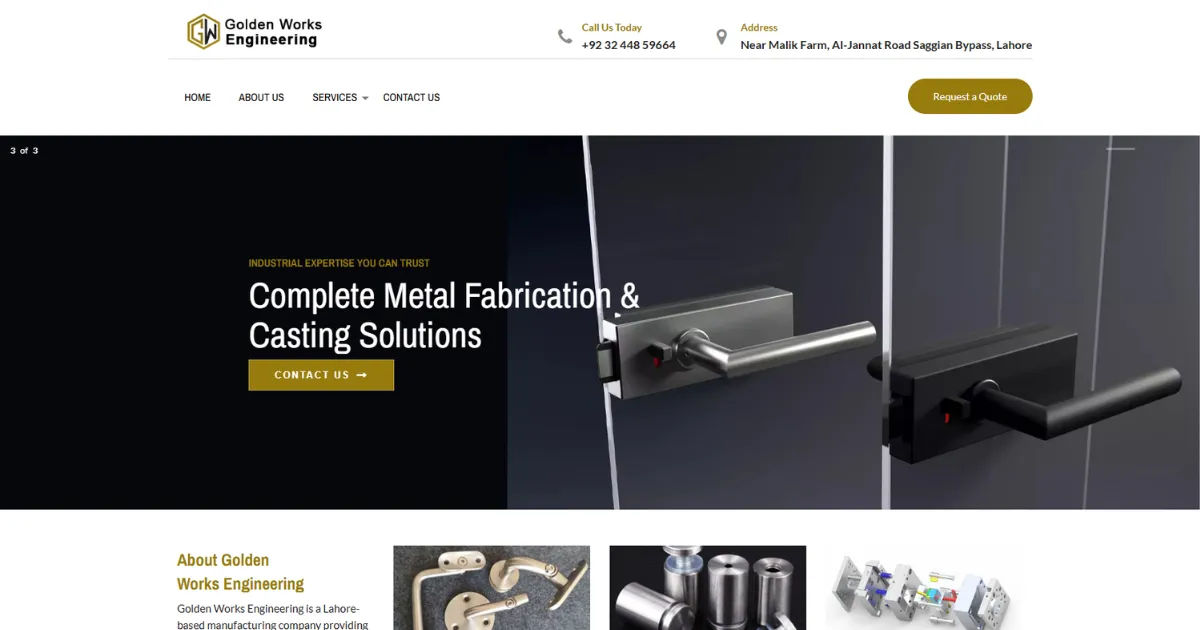
Pakistan's manufacturing sector continues to grow as industries adopt advanced production technologies. Companies are increasingly investing in CNC machining because it helps them produce complex components with excellent accuracy and repeatability. Whether producing a single prototype or thousands of identical parts, CNC machining offers reliable solutions for businesses of every size.
This comprehensive guide explains which industries depend on CNC Machining Pakistan, why the technology is becoming more important, and how it supports economic growth and industrial development.
CNC Machining
CNC stands for Computer Numerical Control. It is a manufacturing process where computers control machine tools such as mills, lathes, routers, grinders, and drilling machines.
Instead of manually operating equipment, technicians program machines to cut, drill, shape, and finish materials with incredible precision. The computer follows exact instructions, ensuring every component matches the required dimensions.
Materials commonly used include steel, stainless steel, aluminum, brass, copper, titanium, plastics, acrylic, nylon, and engineering polymers.
The biggest advantage is consistency. Every finished part is nearly identical, making CNC machining ideal for industries requiring high-quality production.
Why CNC Machining Is Growing in Pakistan
Pakistan's industrial sector has expanded significantly over the past decade. Manufacturers are adopting automation to improve quality and remain competitive in local and international markets.
Several factors are driving this growth.
Businesses need higher precision.
Export industries require international quality standards.
Production deadlines are becoming shorter.
Automation reduces manufacturing errors.
Advanced software improves production efficiency.
These advantages have encouraged companies across Pakistan to invest in CNC technology.
Automotive Industry
The automotive sector is among the largest users of CNC machining.
Vehicle manufacturers need thousands of precision parts for engines, transmissions, steering systems, braking systems, and suspension components.
Even small measurement errors can affect vehicle performance and safety.
CNC machining helps manufacturers produce:
-
Engine blocks
-
Cylinder heads
-
Brake components
-
Gear housings
-
Drive shafts
-
Wheel hubs
-
Transmission parts
-
Custom automotive accessories
Pakistan's growing automobile assembly industry depends on precision manufacturing to maintain quality standards.
Aerospace Industry
Aircraft components require extremely tight tolerances.
Even the smallest mistake can create serious safety risks.
CNC machining produces lightweight and durable components using aluminum, titanium, and specialty alloys.
Common aerospace parts include:
-
Aircraft brackets
-
Structural supports
-
Landing gear components
-
Engine housings
-
Precision connectors
-
Turbine components
Although Pakistan's aerospace manufacturing sector is smaller than automotive manufacturing, demand for precision machining continues to increase.
Medical Equipment Industry
Healthcare depends on accurate medical devices.
Hospitals and laboratories require equipment that performs reliably every day.
CNC machining produces highly precise medical components that meet strict quality standards.
Examples include:
-
Surgical instruments
-
Orthopedic implants
-
Dental tools
-
Prosthetic components
-
Laboratory equipment
-
Medical device housings
The smooth surface finish produced through CNC machining also helps maintain hygiene standards.
Textile Machinery Manufacturing
Pakistan is one of the world's leading textile producers.
Textile factories operate complex machinery around the clock.
These machines require precision replacement parts to minimize downtime.
CNC machining helps manufacture:
-
Roller shafts
-
Gear assemblies
-
Machine brackets
-
Bearings
-
Pulley systems
-
Cutting machine components
Fast production of replacement parts keeps textile factories operating efficiently.
Agricultural Equipment Industry
Agriculture remains one of Pakistan's largest economic sectors.
Farm equipment experiences heavy wear because of continuous use.
Manufacturers use CNC machining to produce durable replacement parts for tractors, harvesters, irrigation equipment, and planting machinery.
Common components include:
-
Hydraulic fittings
-
Gear systems
-
Axles
-
Couplings
-
Bushings
-
Machine brackets
Precision manufacturing improves equipment performance while extending service life.
Oil and Gas Industry
Oil and gas operations demand reliable equipment capable of operating under extreme conditions.
CNC machining produces strong metal components that withstand pressure, heat, and corrosion.
Examples include:
-
Valve bodies
-
Pump housings
-
Flanges
-
Pipe connectors
-
Compressor components
-
Drilling equipment parts
High precision ensures leak-free connections and dependable performance.
Defense Manufacturing
Defense equipment requires extremely accurate components.
Military vehicles, communication systems, and specialized equipment rely on precision manufacturing.
CNC machining produces:
-
Weapon components
-
Vehicle parts
-
Mounting brackets
-
Precision housings
-
Mechanical assemblies
Consistency is critical because every part must perform exactly as intended.
Electronics Industry
Electronic devices contain numerous precision components.
Manufacturers use CNC machining to create protective enclosures and structural parts.
Examples include:
-
Heat sinks
-
Control panels
-
Electronic housings
-
Aluminum frames
-
Mounting plates
-
Connector panels
The growing electronics industry continues to increase demand for precision machining.
Construction Industry
Construction equipment requires strong, durable components.
Heavy machinery manufacturers rely on CNC machining for:
-
Hydraulic cylinders
-
Structural brackets
-
Steel connectors
-
Excavator components
-
Loader parts
-
Industrial fittings
Precision improves equipment reliability and reduces maintenance costs.
Energy Sector
Power generation equipment includes numerous precision-engineered components.
Power plants require accurate replacement parts to reduce downtime.
CNC machining manufactures:
-
Turbine parts
-
Generator housings
-
Pump shafts
-
Cooling system components
-
Mechanical seals
Reliable parts contribute to uninterrupted electricity production.
Food Processing Industry
Food production equipment must meet strict hygiene standards.
CNC machining produces stainless steel parts with smooth finishes that are easy to clean.
Applications include:
-
Conveyor components
-
Mixing equipment
-
Packaging machinery
-
Filling systems
-
Food-grade fittings
Precision helps maintain food safety while improving production efficiency.
Packaging Industry
Packaging companies rely on automated machinery.
These machines require custom precision parts.
CNC machining manufactures:
-
Rollers
-
Cutting blades
-
Guide rails
-
Machine frames
-
Tooling components
Accurate components improve packaging speed and reduce production interruptions.
Plastic Manufacturing
Plastic injection molding requires highly accurate molds.
CNC machining produces molds capable of manufacturing thousands of identical plastic products.
Applications include:
-
Consumer products
-
Household items
-
Industrial containers
-
Automotive plastic parts
-
Medical plastic devices
High-quality molds improve product consistency.
Furniture Industry
Modern furniture manufacturers increasingly use CNC machining.
Woodworking CNC machines create decorative designs while maintaining accuracy.
Applications include:
-
Cabinet doors
-
Decorative panels
-
Furniture frames
-
Office furniture
-
Modular furniture
Automation improves productivity and reduces waste.
Engineering and Industrial Manufacturing
Engineering companies require custom components for machinery repairs and new equipment.
CNC machining produces:
-
Custom gears
-
Precision shafts
-
Machine bases
-
Mounting brackets
-
Industrial rollers
-
Mechanical fixtures
Custom manufacturing allows businesses to solve unique engineering challenges.
Die and Mold Industry
Many manufacturing processes depend on molds and dies.
CNC machining creates highly detailed tooling used in:
-
Plastic injection molding
-
Metal stamping
-
Die casting
-
Rubber molding
Precision tooling ensures consistent product quality.
Railway Industry
Railway maintenance requires reliable replacement components.
CNC machining manufactures:
-
Brake system parts
-
Wheel assemblies
-
Engine components
-
Structural fittings
-
Bearing housings
Precision improves passenger safety and operational efficiency.
Marine Industry
Marine equipment operates in harsh environments.
CNC machining produces corrosion-resistant components including:
-
Propeller parts
-
Pump housings
-
Marine valves
-
Shaft components
-
Mounting brackets
High-quality materials increase durability.
Education and Research
Universities and research institutions frequently require custom prototypes.
Researchers use CNC machining for:
-
Experimental equipment
-
Scientific instruments
-
Robotics projects
-
Engineering prototypes
Rapid production accelerates innovation.
Advantages of CNC Machining for Pakistani Industries
Companies choose CNC machining because it offers many important advantages.
Greater precision.
Excellent repeatability.
Lower production errors.
Faster manufacturing.
Reduced material waste.
Improved product quality.
Ability to manufacture complex designs.
Lower long-term production costs.
Higher customer satisfaction.
Better export opportunities.
These benefits help Pakistani manufacturers compete in international markets.
Materials Used in CNC Machining
Modern CNC machines work with many materials.
These include:
-
Carbon steel
-
Stainless steel
-
Aluminum
-
Brass
-
Copper
-
Titanium
-
Bronze
-
Nylon
-
Delrin
-
Acrylic
-
ABS plastic
-
Polycarbonate
The choice depends on strength, corrosion resistance, weight, and application requirements.
Future of CNC Machining in Pakistan
The future looks promising.
Industries are adopting automation faster than ever before.
Digital manufacturing, computer-aided design, artificial intelligence, and Industry 4.0 technologies continue transforming production facilities.
More Pakistani manufacturers are exporting products internationally, increasing demand for precision-machined components.
Government support for industrial development, technical education, and advanced manufacturing is expected to encourage additional investment.
Small businesses are also adopting CNC technology because modern machines have become more affordable and efficient.
As industrial growth continues, demand for skilled CNC programmers, machine operators, quality inspectors, and manufacturing engineers will continue rising.
Choosing the Right CNC Machining Partner
Selecting an experienced machining company is essential for achieving the best results.
Businesses should evaluate:
-
Industry experience
-
Quality certifications
-
Machine capabilities
-
Material expertise
-
Inspection equipment
-
Delivery performance
-
Customer support
-
Competitive pricing
-
Prototype capabilities
-
Production capacity
A reliable supplier becomes a valuable long-term manufacturing partner.
Common Challenges Facing the Industry
Although CNC machining offers many benefits, manufacturers still face challenges.
High equipment costs can limit investment for smaller businesses.
Skilled operators and programmers remain in high demand.
Regular machine maintenance is necessary to maintain precision.
Imported cutting tools and spare parts may increase production costs.
Despite these challenges, continued investment in education and technology is helping the industry grow steadily.
Conclusion
CNC machining has become an essential part of Pakistan's modern manufacturing industry. From automotive production and textile machinery to aerospace, healthcare, agriculture, construction, electronics, food processing, defense, and energy, almost every major sector depends on precision-engineered components. Computer-controlled manufacturing delivers the accuracy, consistency, and efficiency that today's industries require to remain competitive.
As Pakistan continues expanding its industrial base, CNC machining will play an even greater role in supporting innovation, exports, and economic development. Businesses that invest in advanced machining technologies can improve product quality, reduce manufacturing costs, shorten production timelines, and meet international standards with confidence.
Whether producing prototypes, custom components, or large production runs, CNC machining provides reliable solutions that help manufacturers succeed in demanding markets. The continued adoption of CNC technology will strengthen Pakistan's manufacturing capabilities and create new opportunities for growth, employment, and technological advancement in the years ahead.