
When reaching out to a fabric supplier Dubai contact, it is important to provide clear and complete information about the fabric you need. A supplier can respond more accurately when they understand your requirements, including fabric type, quantity, color, quality, intended use, and delivery expectations.
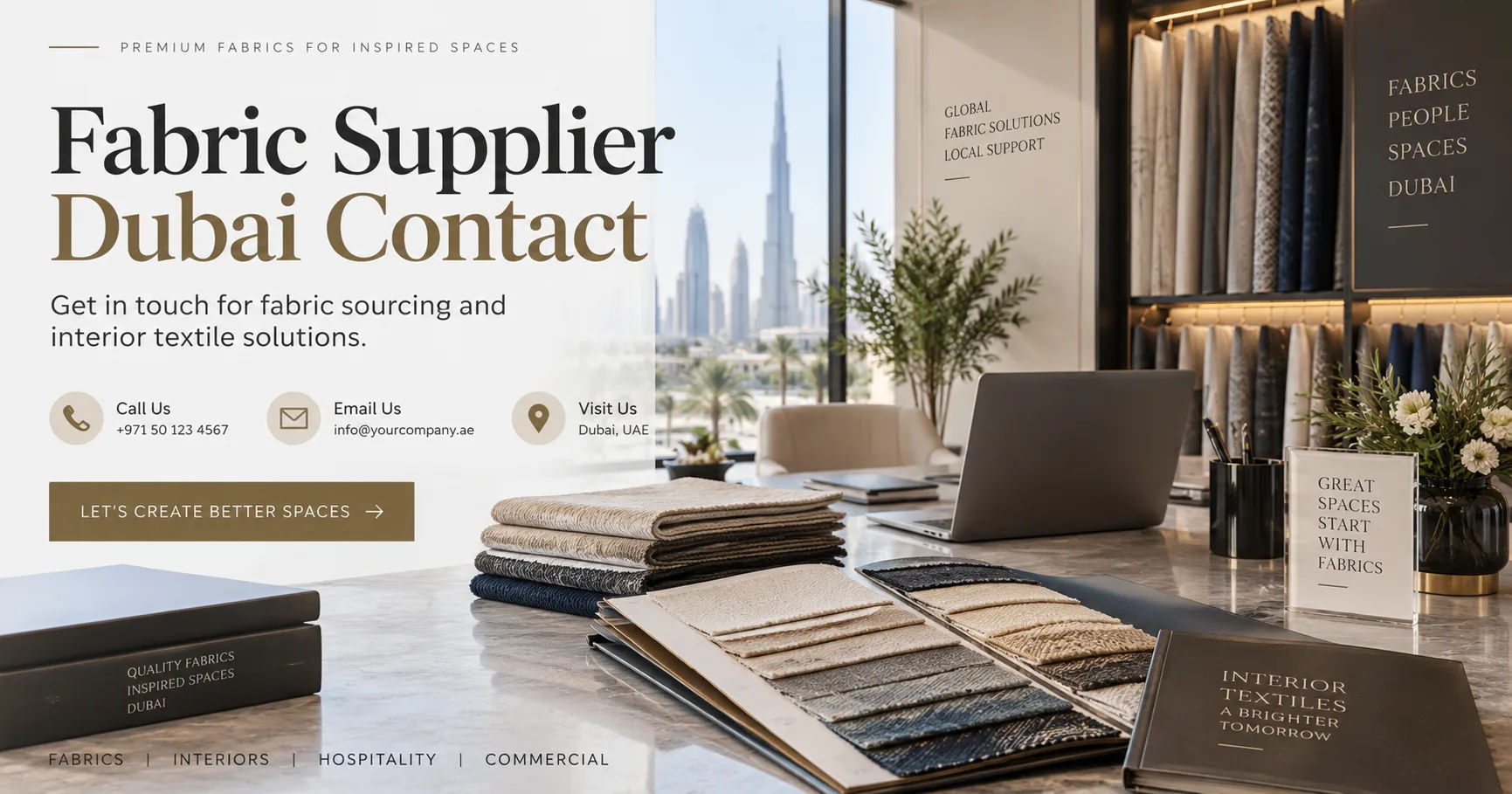
Whether you are a clothing brand, fashion designer, retailer, manufacturer, or individual buyer, a well-prepared inquiry can save time and reduce misunderstandings. Instead of simply asking, “What fabrics do you have?” you can provide specific details that help the supplier recommend suitable options and prepare a quotation.
Dubai has a wide fabric market serving fashion, uniforms, home textiles, hospitality businesses, and other industries. Because suppliers may offer many different materials, your first message should make your requirements easy to understand.
Why Your First Message to a Fabric Supplier Matters
Your first message creates the foundation for communication with a supplier. If your request is too general, the supplier may need to ask several questions before giving you useful information.
For example, saying, “I need fabric for dresses,” does not provide enough information. The supplier does not know whether you need cotton, linen, polyester, silk, viscose, or another material.
A detailed inquiry gives the supplier a better understanding of your project. It can also help you receive more relevant fabric suggestions and pricing information.
When contacting a fabric supplier Dubai contact, think of your first message as a brief purchasing document. It does not need to be complicated, but it should contain the key information needed for a useful response.
Basic Information You Should Include
Your Name or Business Name
Start by introducing yourself or your business.
If you are contacting a supplier on behalf of a company, include the company name and briefly explain what the business does. For example, you might mention that you operate a clothing brand, fashion boutique, uniform company, or textile manufacturing business.
This gives the supplier context about your requirements.
Type of Fabric You Need
The fabric type is one of the most important details to mention.
Be as specific as possible. Instead of simply saying “fabric,” mention the material you are interested in.
Examples include:
-
Cotton
-
Linen
-
Polyester
-
Viscose
-
Rayon
-
Denim
-
Silk
-
Velvet
-
Chiffon
-
Organza
-
Wool
-
Jersey
-
Blended fabrics
If you are unsure about the exact material, describe the characteristics you want. For example, you might need a lightweight, breathable fabric for summer clothing or a heavier material for jackets.
A knowledgeable supplier can then suggest suitable alternatives.
Explain the Intended Use
Suppliers need to know how you plan to use the fabric.
The same material may not be suitable for every application. Fabric for children's clothing has different requirements from fabric for curtains, uniforms, upholstery, or formal dresses.
Explain whether the fabric will be used for:
-
Casual clothing
-
Formal dresses
-
School uniforms
-
Work uniforms
-
Abayas
-
Shirts
-
Trousers
-
Children's clothing
-
Home textiles
-
Curtains
-
Bedding
-
Bags
-
Upholstery
When you contact a fabric supplier Dubai contact, mentioning the intended use can help the supplier recommend the appropriate weight, texture, durability, and finish.
Specify the Quantity You Need
Quantity is another important part of your inquiry.
Tell the supplier how many meters, rolls, kilograms, or pieces you require, depending on how the fabric is sold.
For example, instead of writing:
“I need cotton fabric.”
You could write:
“I am looking for approximately 500 meters of lightweight cotton fabric.”
This gives the supplier a clearer idea of the size of your order.
Mention Expected Future Orders
If your first order is a sample or small quantity but you expect regular purchases, mention this.
For example, you can explain that you are testing the fabric for a new collection and may place larger monthly orders if the quality meets your requirements.
This information may be useful when discussing availability, pricing, production, and long-term supply arrangements.
Include Your Preferred Colors
Color can significantly affect fabric availability and pricing.
If you already have specific colors in mind, provide the names, references, or color codes whenever possible.
For example, you might request:
-
Black
-
White
-
Navy blue
-
Beige
-
Emerald green
-
Burgundy
-
Pastel pink
If you have a physical sample or digital color reference, ask whether the supplier can match it.
For professional clothing production, relying only on general color names may create confusion. A supplier may interpret “blue” differently from your expectations.
Provide Fabric Specifications
If you already know the technical specifications you need, include them in your message.
Important specifications can include fabric width, weight, composition, weave, finish, and stretch.
Fabric Composition
Tell the supplier whether you need 100% of a particular material or a blend.
For example:
“65% polyester and 35% cotton”
is much more useful than simply saying:
“Polyester fabric.”
Fabric Width
Fabric widths vary between materials and suppliers.
If your project requires a particular width, mention it clearly.
For example:
“I need fabric approximately 58 inches wide.”
If you do not know the required width, ask the supplier to provide the available options.
Fabric Weight
Fabric weight can affect how the finished product looks and feels.
Depending on the material, weight may be described using different measurements, including GSM.
If you have a specific GSM requirement, include it in your inquiry.
For example:
“I am looking for cotton fabric around 150 GSM for lightweight summer clothing.”
Ask About Samples
Requesting a sample before placing a large order can be helpful.
A photograph can show color and general appearance, but it may not accurately communicate softness, thickness, texture, stretch, or drape.
When contacting a fabric supplier Dubai contact, ask whether samples are available and whether they are free or chargeable.
You can also ask how samples are delivered and whether the sample cost can be adjusted against a future bulk order.
Ask for Color Swatches
If color accuracy is important, request a color swatch.
A swatch allows you to physically inspect the shade before ordering a large quantity.
This can be especially useful for clothing collections where several garments need to have consistent colors.
Ask About Price
Once you have explained your requirements, ask for pricing.
Do not simply ask, “How much is fabric?”
Instead, provide the quantity and specifications so the supplier can give you a more relevant quotation.
For example:
“Please provide your price per meter for 500 meters of 100% cotton fabric, approximately 150 GSM, in navy blue.”
This makes the request much easier to process.
Ask Whether Prices Are Wholesale
If you are buying in large quantities, ask whether the quoted price is wholesale or bulk pricing.
Some suppliers may have different rates based on order quantity.
You can ask for prices at several quantities if you are still planning your purchase.
For example:
“Please provide prices for 100, 500, and 1,000 meters.”
This allows you to compare how the unit price changes with larger orders.
Ask About Minimum Order Quantity
Minimum order quantity, commonly called MOQ, is an important consideration.
A supplier may have a minimum amount they are willing to sell for a particular fabric.
For example, one fabric might be available from 50 meters, while another may require an order of 500 meters.
Ask about the MOQ before finalizing your plans.
This is particularly important for small businesses and new brands that may not need large quantities.
Ask About Stock Availability
Availability should also be confirmed before placing an order.
A fabric may appear in a supplier's catalog but may not currently be available in the required quantity or color.
Ask whether the fabric is currently in stock.
If it is not available, ask about the expected production or restocking time.
This can help you plan your production schedule.
Ask About Lead Time
Lead time refers to how long it may take for the supplier to prepare your order.
If you have a deadline, tell the supplier about it.
For example:
“I need the fabric delivered before the first week of November. Please confirm whether this timeline is possible.”
A supplier can then determine whether the required quantity can be prepared within your timeframe.
Why Delivery Timing Matters
Late fabric deliveries can delay cutting, stitching, packaging, and final product delivery.
For fashion businesses, timing can be particularly important because collections are often planned around specific seasons or events.
Clear communication about deadlines can reduce avoidable delays.
Ask About Delivery Options
If you are purchasing from Dubai, clarify how the fabric will be delivered.
You can ask about:
-
Local Dubai delivery
-
Delivery to other UAE emirates
-
International shipping
-
Courier services
-
Freight options
-
Pickup from the supplier's location
If you are ordering from outside the UAE, provide your destination country and city.
The supplier may then be able to estimate shipping costs and delivery times.
Ask About Payment Terms
Payment terms should be discussed before confirming a significant order.
Ask which payment methods the supplier accepts.
Depending on the supplier, options may include bank transfer, card payment, online payment, or other business payment methods.
For larger orders, also ask whether a deposit is required before production begins.
Make sure the agreed payment terms are clearly documented.
Ask About Quality and Inspection
Quality expectations should be discussed before purchasing.
If you need consistent fabric quality for repeated production, ask how the supplier manages quality control.
You can ask about:
-
Fabric composition
-
Color consistency
-
GSM
-
Width
-
Shrinkage
-
Colorfastness
-
Defects
-
Stretch
-
Finishing
If quality is particularly important, request a sample and test it before committing to a large order.
Mention Your Required Certification
Some businesses require specific certifications or documentation.
If your project has compliance requirements, tell the supplier in your first inquiry.
Depending on the product and intended market, you may need information related to fabric composition, safety, environmental standards, or other certifications.
Do not assume that every supplier carries the same documentation. Ask the supplier to confirm what they can provide.
Share Reference Images When Useful
A reference image can make communication easier.
If you have seen a particular fabric style, texture, pattern, or finish that matches your requirements, you can send an image to the supplier.
However, explain what you want the supplier to focus on.
For example, you might say that the image is a reference for texture but that you require a different color.
This prevents the supplier from assuming that every aspect of the image must be copied.
What a Professional Fabric Inquiry Should Look Like
A good inquiry should be short enough to read easily but detailed enough to answer your main questions.
You can structure your message by introducing yourself, explaining the product you need, providing specifications, stating the quantity, and asking for price and availability.
For example:
“Hello, I am looking for fabric for a women's clothing collection. I need approximately 500 meters of lightweight cotton fabric, around 150 GSM, in navy blue and beige. Please confirm the available fabric options, price per meter, MOQ, current stock, sample availability, and delivery time. Please also let me know your payment and delivery terms. Thank you.”
This type of message gives the supplier enough information to begin the discussion.
Common Mistakes to Avoid
Sending Too Little Information
A message such as “Send fabric price” is usually too vague.
The supplier may need to ask several follow-up questions before providing a quotation.
Giving Conflicting Requirements
Make sure your specifications match your actual needs.
For example, do not request both very lightweight and extremely heavy fabric in the same inquiry unless you are asking for separate options.
Ignoring Minimum Order Quantities
Always confirm MOQ before planning your purchase.
A supplier may have excellent fabric but may not accept the quantity you require.
Failing to Ask About Samples
For unfamiliar suppliers or expensive bulk orders, consider requesting a sample first.
This allows you to evaluate the material before making a larger commitment.
Not Discussing Delivery
A low fabric price may not represent your final cost if shipping and other charges are significant.
Ask about delivery costs and estimated timelines before confirming your order.
A Simple Checklist Before Sending Your Message
Before contacting a fabric supplier Dubai contact, check that your inquiry includes the main information needed for a quotation.
Confirm that you have mentioned your fabric type, intended use, quantity, color, composition, width, weight, and any special requirements.
Also ask about samples, MOQ, price, stock availability, lead time, delivery, payment terms, and quality documentation when relevant.
You do not necessarily need every detail if you are still researching options. However, the more specific your requirements are, the easier it becomes for a supplier to give you a useful response.
How Clear Communication Can Build a Better Supplier Relationship
Supplier relationships often continue beyond a single purchase.
If you are satisfied with a fabric supplier, future orders can become easier because the supplier becomes familiar with your specifications.
Clear communication from the beginning can help establish professional expectations.
Keep records of quotations, approved samples, specifications, purchase orders, payment terms, and delivery details.
For repeat orders, compare the new fabric with your approved sample when appropriate. This can help maintain consistency across different production batches.
Questions to Ask Before Placing a Bulk Order
Before committing to a large fabric purchase, make sure you understand the supplier's terms.
Ask whether the quoted price includes taxes or other charges where applicable.
Confirm whether the fabric is ready stock or made to order.
Ask how much fabric is available in your required color and specification.
Confirm the expected delivery date.
If the fabric is being shipped internationally, ask about shipping arrangements and documentation.
These questions can prevent unexpected problems later.
Conclusion
Knowing what to send to a fabric supplier Dubai contact can make the buying process much smoother. A clear inquiry gives the supplier the information needed to understand your requirements, recommend suitable materials, and prepare an accurate quotation.
Start with the basics: explain who you are, what fabric you need, how you will use it, the quantity required, and your preferred colors. Then provide technical details such as composition, width, GSM, finish, and stretch when applicable.
You should also ask about samples, MOQ, pricing, stock availability, lead time, delivery, payment methods, and quality requirements. If you have a deadline, communicate it clearly rather than assuming the supplier will know when you need the material.
Most importantly, avoid making your first message unnecessarily complicated. The goal is to provide enough useful information for the supplier to respond efficiently.
Whether you are purchasing fabric for a small clothing project or managing regular commercial production, good communication is an important part of successful sourcing. A well-written inquiry can save time, reduce misunderstandings, and help both sides establish clear expectations before an order is placed.
About the Author
